How to Build a Cybersecurity‑First Culture Without Slowing Teams Down



Cybersecurity isn’t just about tools anymore — it’s about people.
You can have the strongest firewalls, best encryption, and a world-class SOC — and still get breached because someone clicked the wrong link or reused a password.
That’s why, for modern SMEs, cybersecurity can’t be “owned” by the IT department alone. It has to be embedded across your company culture — from leadership to interns, across departments and devices.
But how do you create a security-aware culture without making people feel micromanaged or bogged down?
Let’s break it down.
Start with Awareness, Not Fear
Fear-driven security messaging doesn’t work. You don’t need to scare employees into compliance — you need to empower them with context and clarity.
Here’s what works:
- Explain why a certain policy exists (e.g., “Why MFA matters” instead of “You must turn this on”)
- Share short, real-world examples (especially local or industry-specific incidents)
- Make it relatable: “This isn’t just about company data — it’s also about protecting your own information”
Consider simple quarterly security awareness training that’s interactive, not lecture-based.
Bake Security into Everyday Tools
A common myth: “Security slows us down.”
The truth? Good security is invisible — it works in the background, without extra steps or disruption.
Here’s how to get there:
- Use password managers so employees don’t have to memorize logins
- Enforce Multi-Factor Authentication (MFA) with push notifications, not clunky SMS
- Enable device encryption and remote wipe capabilities automatically
- Set policies via endpoint management tools so users don’t need to worry about compliance
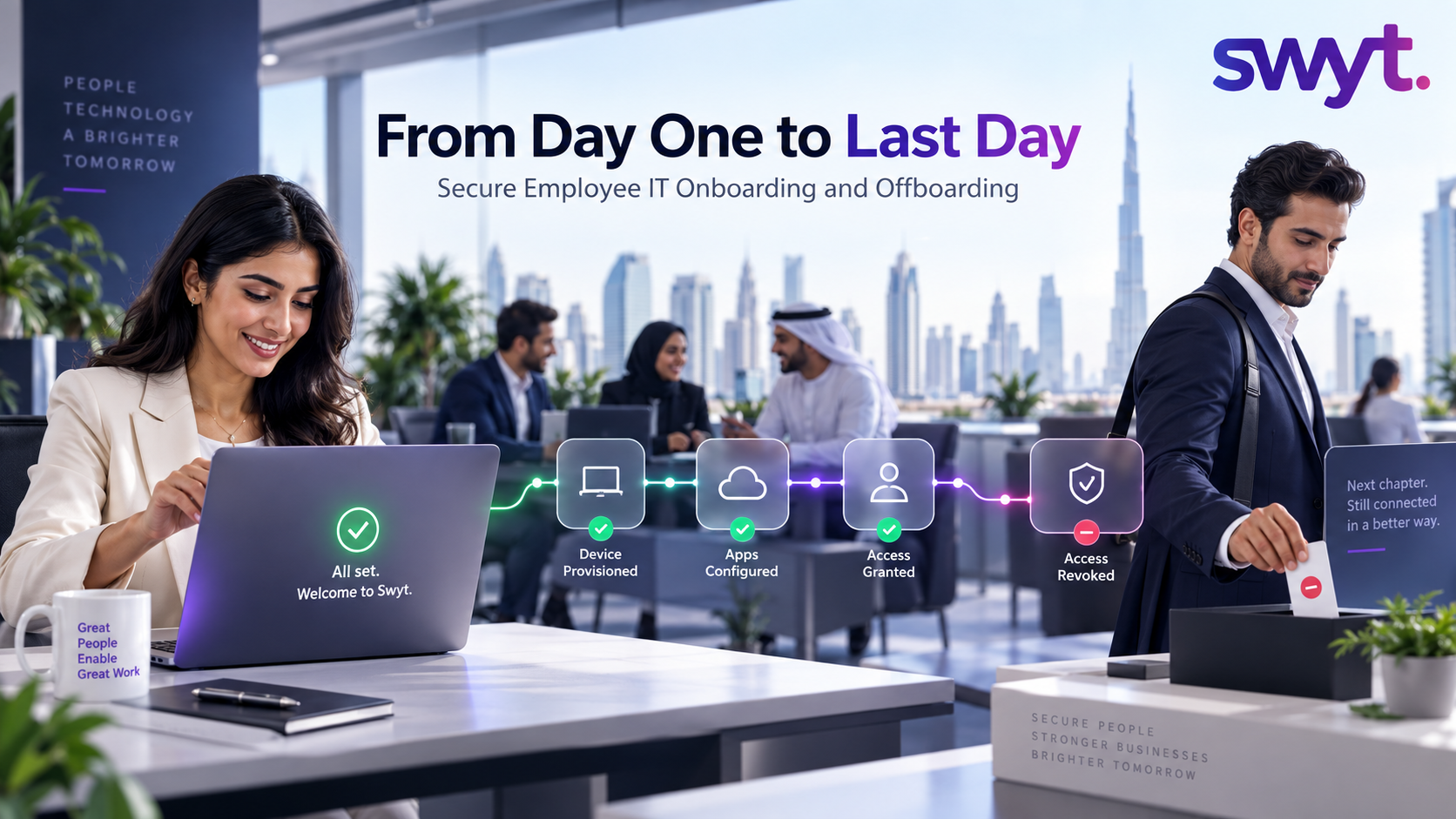
With device management and cloud security built into Swyt, most of this happens without users even noticing.

Kill Shadow IT Before It Spreads
Every time an employee installs an unapproved app or signs up for a new SaaS tool without telling IT, they’re creating risk.
This is called Shadow IT, and it’s one of the biggest gaps in SME cybersecurity today.
How to reduce it:
- Give teams a clear, fast way to request new tools
- Make it easy to access approved apps via SSO or bookmarks
- Monitor device usage to spot new or risky software
- Use tools like infrastructure management to maintain full visibility — without restricting flexibility
Make Security a Team Sport
Different teams face different risks:
- Sales might be using public Wi-Fi during travel
- Finance handles sensitive invoices and banking access
- HR stores ID documents and personal data
Each group needs tailored guidance, not one-size-fits-all rules.
A few tactics:
- Segment your internal training (Sales vs Finance vs IT)
- Use role-based access control to limit what people can see/do
- Build awareness around data security in tools like email, cloud storage, or CRMs
You can’t expect security to stick if it’s generic. Relevance is key.

Make Compliance Part of the Culture
If you're in a regulated space — like finance, healthcare, or legal — compliance isn’t just a checkbox.
It impacts your deals, partnerships, insurance, and brand.
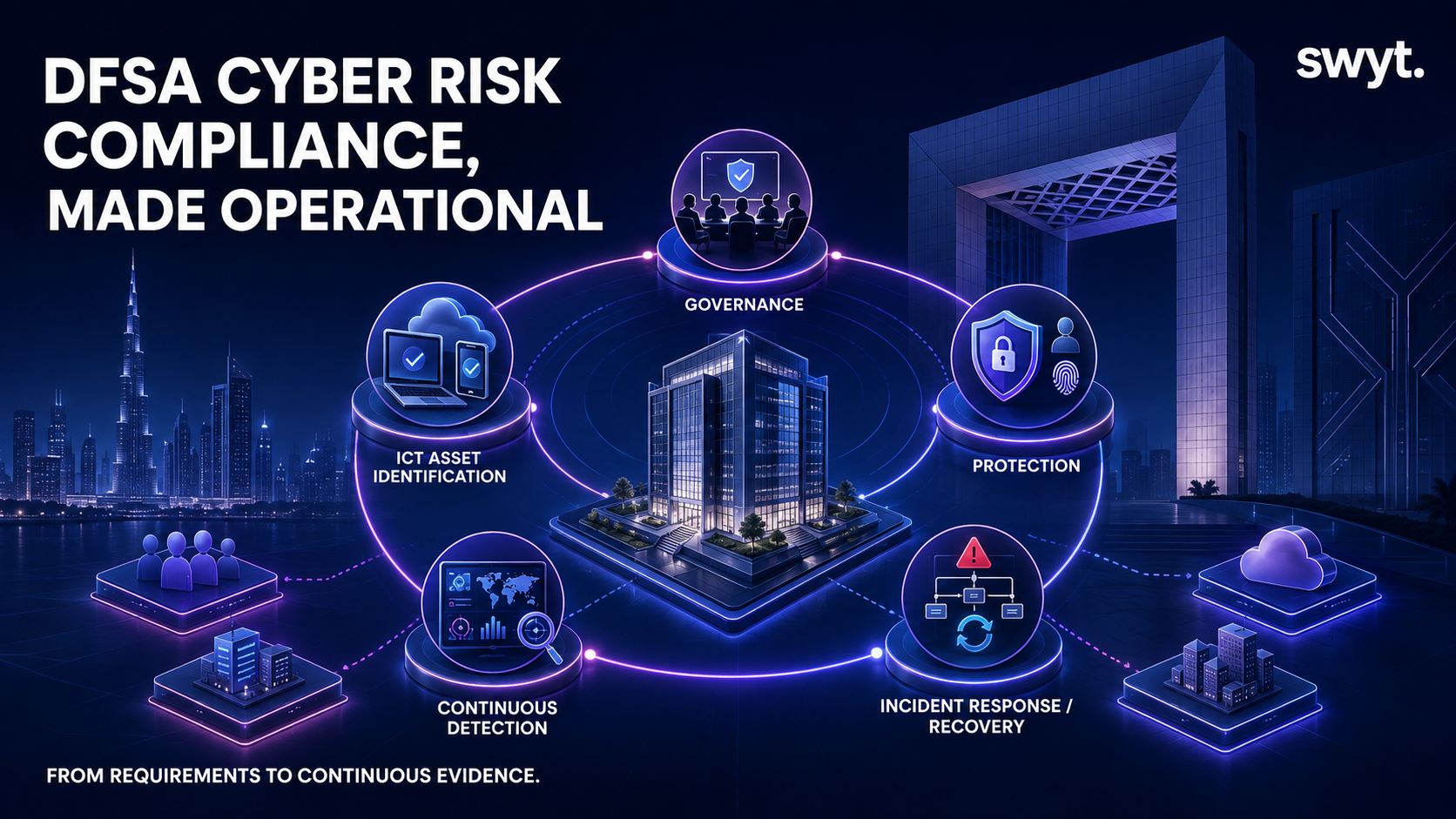
But again, compliance doesn’t have to slow you down. Platforms like Swyt embed compliance and certification support directly into your IT workflows — whether you need ISO 27001, DFSA, or SOC 2.
No one likes chasing documentation or doing manual audits. Automating this frees up your team to focus on their actual jobs.
Your People Are the Perimeter
The old security model was: lock the building, control the network.
But in today’s hybrid, SaaS-powered world, your people are the new perimeter.
And if they’re not equipped — with training, tools, and support — your perimeter is full of holes.
Culture change takes time. But with the right mindset, you can make security an enabler, not a blocker.
How Swyt Helps You Build a Cybersecurity-First Culture
At Swyt, we help SMEs across the UAE and GCC move from reactive IT to proactive protection — with security built in at every layer:
✅ Always-on device monitoring
✅ Automated patching, backups, and endpoint protection
✅ Policy enforcement via MDM and SSO
✅ Integrated compliance dashboards for ISO, DFSA, SOC 2
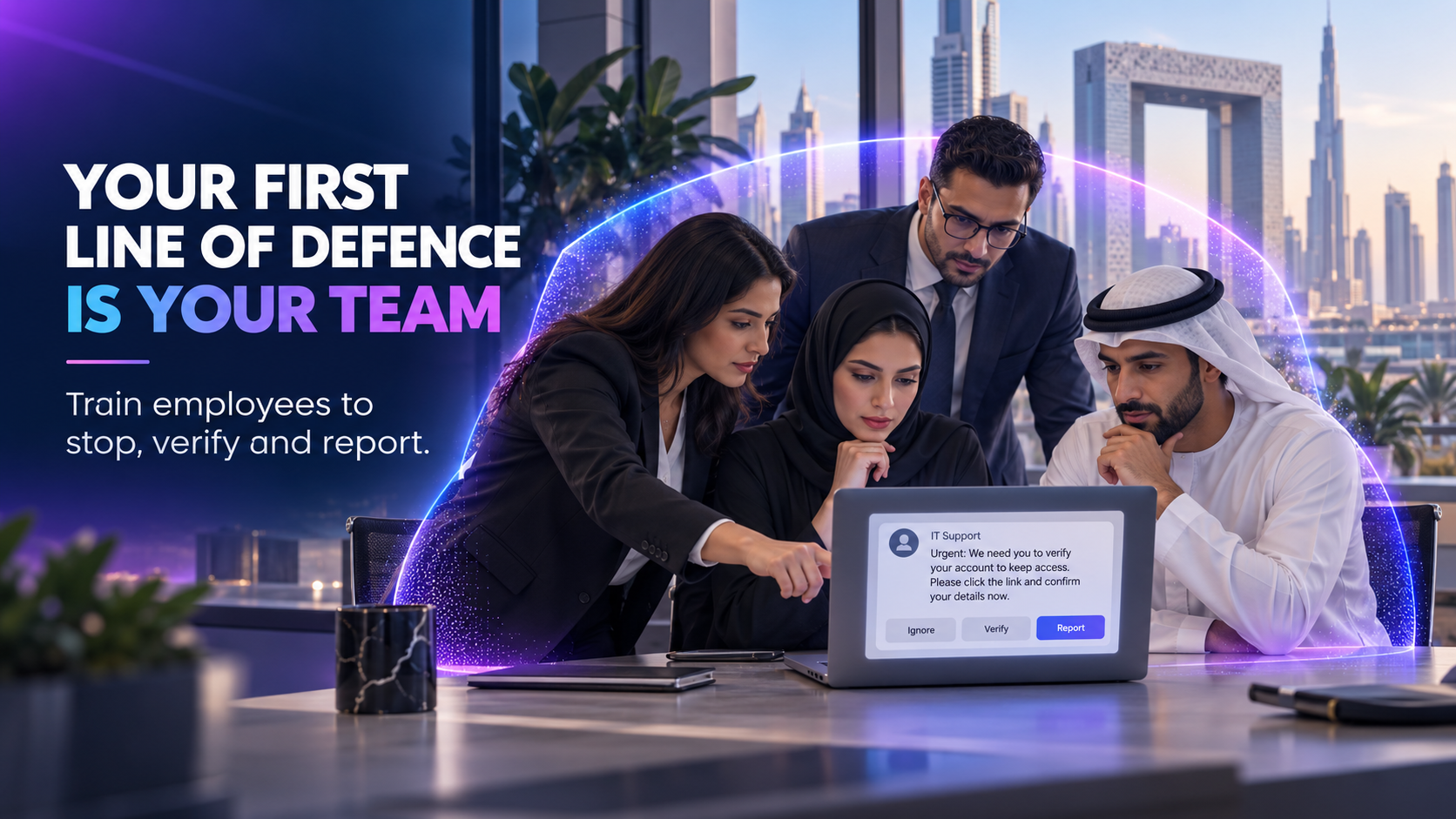
✅ Awareness training and phishing simulations
All managed in one platform. No patchwork. No excuses.

.png)