Swyt vs. a Traditional IT AMC: What Is the Difference?


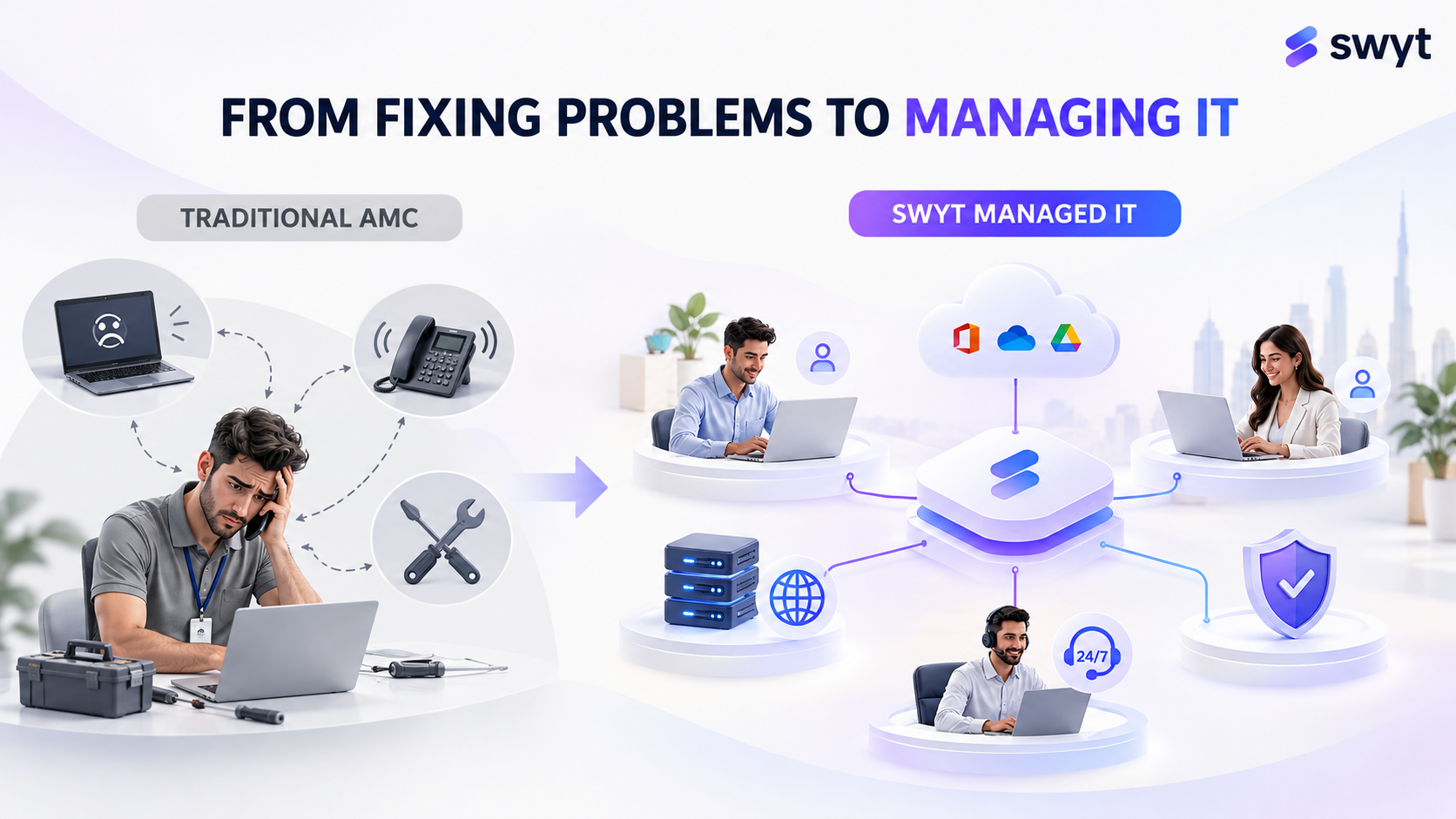
For many businesses in Dubai and across the UAE, an IT Annual Maintenance Contract is the default way to outsource technical support.
The traditional model is familiar: a company pays a fixed annual fee, calls the provider when something stops working and receives remote or on-site assistance within the limits of the contract.
This model can be sufficient for a small and relatively simple office. But technology has changed.
Employees now work from different locations. Business data sits across Microsoft 365, Google Workspace and multiple SaaS applications. Devices need to be secured wherever they are used. New joiners require access to several systems, while former employees must be removed quickly. Cybersecurity incidents do not wait for office hours.
As a result, businesses increasingly need more than equipment maintenance and technician visits. They need someone to manage their complete IT environment continuously.
That is the difference between a traditional AMC provider and Swyt.
The short answer
A traditional IT AMC generally focuses on maintaining specified equipment and responding to technical problems.
Swyt combines an IT AMC with a managed IT operating model. It supports employees, manages devices and applications, administers cloud environments, strengthens cybersecurity and provides ongoing visibility through one accountable service.
The distinction is not simply about having more services. It is about moving from reactive maintenance to continuous IT management.
Traditional AMC vs. Swyt at a glance
Individual providers and contracts vary. Businesses should always compare the actual scope, exclusions and service levels offered—not the AMC label alone.
1. From maintaining equipment to managing the whole IT environment
Traditional AMCs were designed when most company technology was located inside the office.
The contract would typically list computers, printers, servers, switches and other equipment. If a covered item failed, the provider would diagnose the problem and attempt to restore it.
Today, a company’s IT environment extends far beyond its physical equipment. It includes:
· Employee identities and access rights
· Laptops and mobile devices
· Microsoft 365 or Google Workspace
· Cloud storage and business applications
· Wi-Fi, firewalls and internet connections
· Backups and recovery arrangements
· Security policies and monitoring
· External vendors and software licences
· Remote and hybrid employees
Swyt manages these elements as one connected environment. The objective is not only to repair devices but to keep employees productive, systems controlled and company information protected.
2. From waiting for a problem to preventing one
The traditional AMC workflow often begins when the client reports an issue.
An employee cannot connect to the Wi-Fi. A laptop has stopped working. The printer is unavailable. Someone calls the provider, a technician investigates and the ticket is closed when the immediate problem is resolved.
This is necessary—but it is only one part of effective IT management.
Swyt also focuses on the conditions that create incidents. This includes monitoring devices and infrastructure, reviewing security controls, managing updates, documenting recurring issues and identifying risks before they cause larger disruption.
For example, instead of repeatedly resetting accounts after access problems, the wider identity configuration can be reviewed. Instead of replacing a failed network component without further analysis, the health, configuration and resilience of the network can be assessed.
The goal is to reduce repeated disruption rather than simply process the same problem each time it returns.
3. From office-hours support to a 24/7 helpdesk
Many traditional AMC agreements define working hours, a limited number of visits and a response window. Requests outside those conditions may wait until the next business day or generate an additional charge.
That structure may work for businesses operating from one location during standard office hours. It becomes less suitable when teams work evenings, weekends or across several countries.
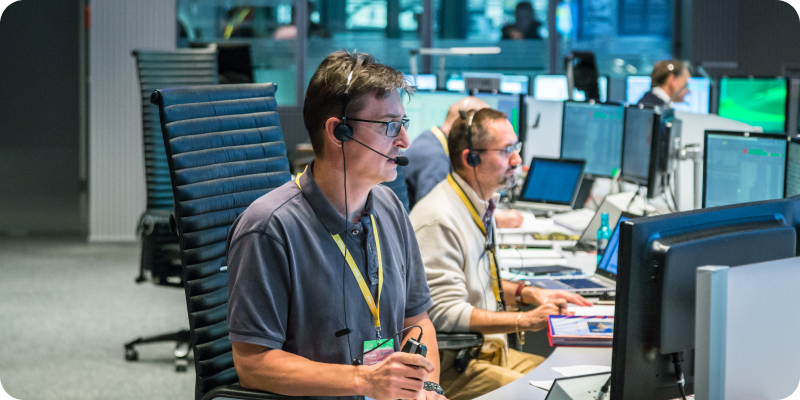
Swyt provides a 24/7 IT helpdesk, allowing employees to request assistance through the channels they already use, including Slack, Microsoft Teams, WhatsApp, email and live chat.
Requests are recorded, prioritised and escalated through a structured support process. When remote support is insufficient, on-site intervention can be coordinated according to the agreed service level.
This gives the business a support function rather than dependence on the availability of one technician.
4. From separate cybersecurity projects to security built into IT operations
In a traditional AMC, cybersecurity may be treated as a separate project or product purchase.
The provider maintains the computers, while antivirus, email protection, mobile-device management, access reviews and employee security are handled separately—or not assigned to anyone clearly.
That separation creates gaps because many security risks begin with routine IT activities:
· A former employee still has access to company applications.
· A laptop is not encrypted or centrally managed.
· An administrator account does not use multi-factor authentication.
· A cloud folder is shared too widely.
· A new employee receives unnecessary privileges.
· A critical update is repeatedly postponed.
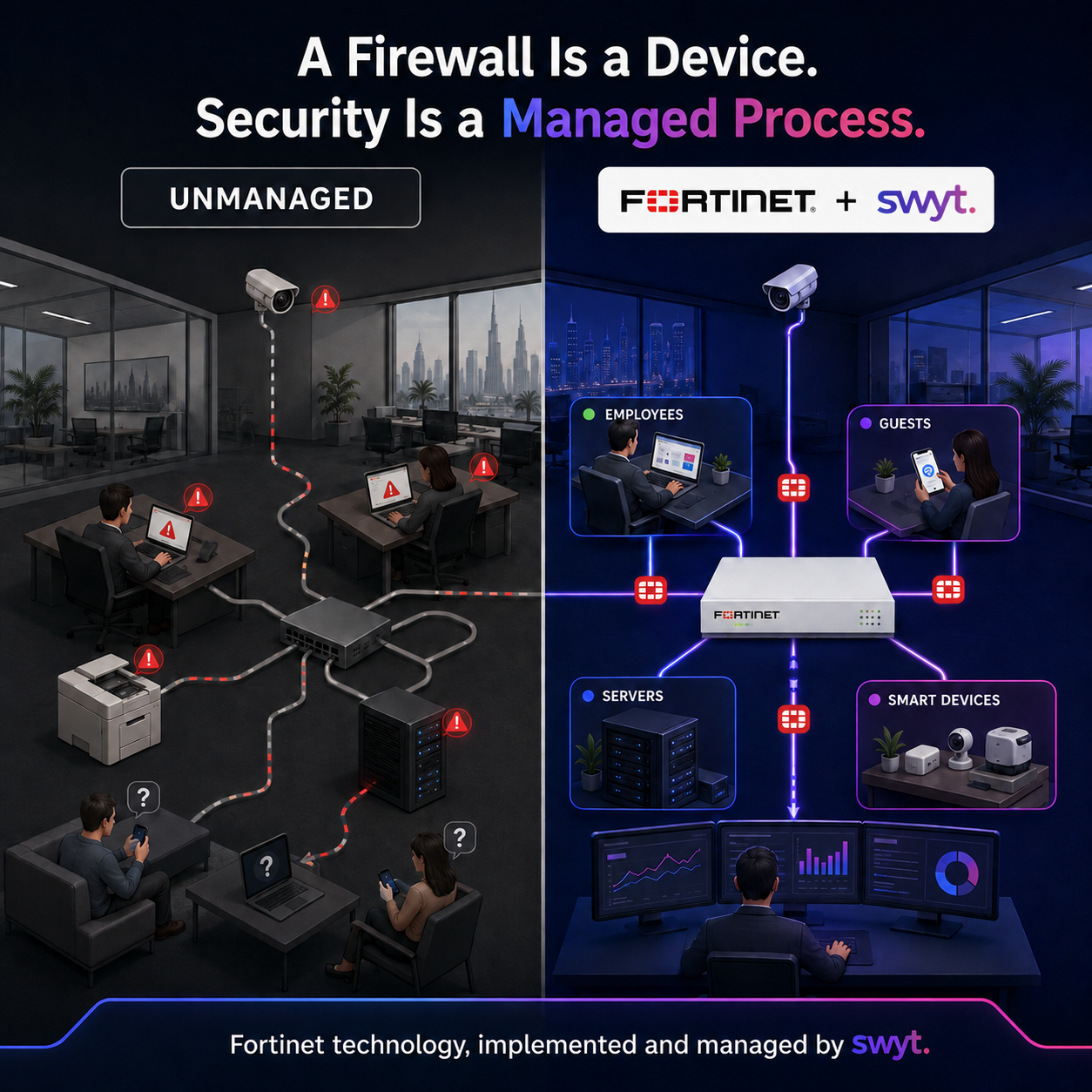
Swyt integrates security controls into everyday IT management. Depending on the selected scope, this can include device management, identity and access controls, endpoint protection, firewall administration, backups, monitoring, data protection and cybersecurity reporting.
This does not transfer the client’s underlying cyber risk or regulatory responsibility to Swyt. It gives the client a structured technical partner to operate and evidence the agreed controls.
5. From ad-hoc onboarding to controlled employee lifecycle management
Joining and leaving a company now involves much more than preparing or collecting a laptop.
A new employee may need an email account, application licences, shared-drive access, security policies, multi-factor authentication and a properly configured device. When someone leaves, those permissions, sessions and devices must be addressed quickly.
Under a traditional AMC, the company may coordinate these steps itself and call the IT provider only for selected technical actions.
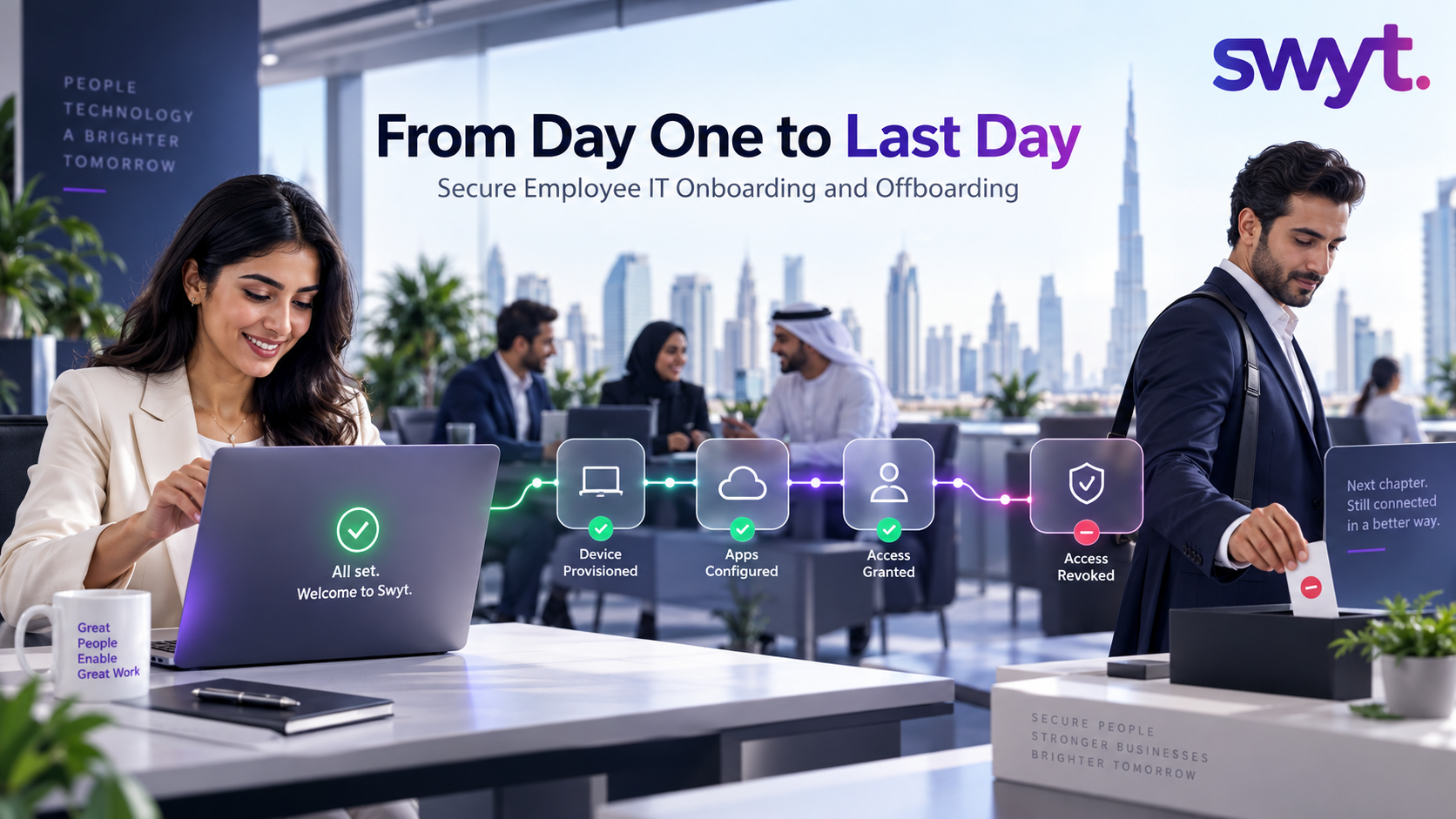
Swyt approaches onboarding and offboarding as repeatable operational processes. Requests can be documented, access can be assigned according to the employee’s role, devices can be prepared and former users can be removed from the relevant systems.
This improves the employee experience while reducing the security risk created by excessive or outdated access.
6. From fragmented vendors to one accountable IT partner
SMEs frequently operate with several disconnected technology providers:
· One company manages the network.
· Another supplies laptops.
· A freelancer administers Microsoft 365.
· A cybersecurity company manages the firewall.
· The office manager coordinates employees’ IT requests.
When an incident affects more than one system, responsibility can become unclear. Each provider may confirm that its own component is working while the client remains responsible for coordinating the overall resolution.
Swyt provides one operating layer across the environment. Its scope can cover employee support, cloud administration, devices, applications, infrastructure, security and coordination with specialist vendors.
The purpose is not necessarily to replace every technology supplier. It is to give the client clear ownership of day-to-day IT operations and a single route for escalation.
7. From limited reporting to operational visibility
A traditional AMC report may show completed visits, closed tickets or replaced equipment. Useful information can also remain in technicians’ messages, spreadsheets or personal knowledge.
Business leaders increasingly need a clearer view of:
· Devices and their assigned users
· Open and recurring support issues
· Response and resolution performance
· User and administrator access
· Security-control coverage
· Ageing equipment and warranty status
· Software subscriptions and licences
· Identified risks and remediation actions
Swyt centralises these operational records so that IT decisions can be based on a current view of the environment rather than reconstructed when an audit, incident or employee departure occurs.
8. From a fixed list of assets to a model that scales with the business
A traditional AMC may be built around a defined number of devices, sites, support hours or technician visits. When the company grows, each addition can require a new quotation or contract adjustment.
Swyt is designed around a changing workforce. Users, devices, applications and offices can be added as the company expands. The service can also evolve from essential support into wider infrastructure, security and compliance management.
This is particularly relevant for businesses that:
· Are hiring regularly
· Operate across the UAE or GCC
· Have remote or travelling employees
· Need more formal cybersecurity controls
· Are preparing for an audit or certification
· Cannot justify building a complete internal IT team
Is Swyt always the better option?
Not necessarily.
A very small office with simple technology, few support requests and limited security requirements may only need an affordable break-fix provider or a basic AMC.
A large organisation with a mature internal IT department may prefer to keep most responsibilities in-house and use external specialists only for specific services.
Swyt is best suited to growing SMEs that depend heavily on technology but do not want to recruit and manage a complete internal team for support, infrastructure, cloud administration and cybersecurity. It can also complement an existing internal IT manager by providing wider coverage, tools and specialist expertise.
Questions to ask when comparing Swyt with an AMC provider
Before selecting any IT partner, ask:
1. Is the contract based on users, devices, visits or support hours?
2. Which systems, applications and locations are included?
3. Is support available outside normal office hours?
4. What are the response and escalation commitments?
5. Are remote and on-site interventions included?
6. Who administers Microsoft 365 or Google Workspace?
7. Who manages employee onboarding and offboarding?
8. Which cybersecurity controls are included?
9. How are recurring problems identified and eliminated?
10. What reporting and asset visibility will management receive?
11. Who coordinates third-party vendors during an incident?
12. Which activities generate an additional quotation?
The answers reveal whether the business is purchasing maintenance visits or gaining an accountable IT function.
The bottom line
A traditional AMC is primarily designed to keep specified technology working. Swyt is designed to manage how the entire business uses technology.
The traditional provider is often called when something breaks. Swyt combines support with continuous management of employees, devices, applications, infrastructure and security.
For a modern SME, the question is therefore not simply: “Who can fix our computers?”
It is: “Who is responsible for keeping our people productive, our systems controlled and our business secure?”
That is the role Swyt is built to perform.
Frequently asked questions
Is Swyt an IT AMC provider?
Yes. Swyt provides an IT Annual Maintenance Contract, but its model extends beyond traditional maintenance. It combines ongoing support with device, application, infrastructure, cloud and cybersecurity management.
What does a traditional IT AMC usually cover?
Coverage varies by provider. A typical contract may include troubleshooting, preventive maintenance, remote assistance and an agreed number of on-site visits for listed equipment. Businesses should review the precise scope, exclusions and service levels before signing.
Does Swyt replace an internal IT employee?
Swyt can operate as the outsourced IT function for an SME or complement an existing internal IT manager. The appropriate structure depends on the company’s size, complexity and need for on-site presence.
Does Swyt provide on-site support in Dubai and the UAE?
Yes. Swyt combines remote helpdesk support with on-site intervention according to the client’s agreed scope and service levels.
Does an IT AMC include cybersecurity?
Not automatically. Some providers include basic security activities, while others price cybersecurity separately. Swyt can integrate device security, identity controls, infrastructure protection, monitoring and reporting into the managed service scope.
How should a business compare IT AMC quotations?
Compare the covered users, devices, systems, locations, support hours, service levels, cybersecurity controls, exclusions and additional charges. Price alone does not show whether the provider will own the complete IT environment.
Looking for more than a traditional IT AMC?
Swyt gives UAE businesses one team for employee support, devices, applications, infrastructure and cybersecurity—with 24/7 assistance and clear operational visibility.
Explore Swyt’s IT Annual Maintenance Contract or contact us to compare your current IT support model with a modern managed service.